Social Animal


New York · Manila · The Carolinas A Theater Company · MMXXV

The
human
animal,
on stage.

Heightened-language theater. Shakespeare, Bromley, the verse tradition.

Forming the company now — for actors, designers, and producers.

Scroll
FIG. II the room reads the self
FIG. III the text is the action

Status.
Language.
The shifting self.

We make theater about the self under pressure — in the throne room and the green room, in the verse and the vulgar, in the sublime and the street. The work refuses to choose between them.

Every encounter is a live negotiation. We read the room, we read the other person, and we present — mostly without knowing it — the version of ourselves most likely to change the situation in our favor. We don’t experience this as performance. We experience it as simply being. But it is performance. It has strategy. It has stakes. And when it fails, or when it’s suddenly visible to us, that is the moment drama begins.

We are drawn to work that puts the human animal under pressure — where the self the character has been performing is no longer enough for the person in front of them, and a new self must be found, or invented, or abandoned entirely. Where the gap between who you are and who you need to be right now is the only place the story lives.

The room contains both. The room insists on both.

We work between New York City · Manila · The Carolinas

Three questions we keep asking.
01

“Who are you performing for in this moment — and does that version of you have any chance of getting what you need?”

02

“What happens to a person when every version of themselves they’ve tried has failed the room?”

03

“What does the body betray that the performance is working to conceal?”

“Joshua is not bound by the ordinary or mundane. His creativity exists both within and without the proverbial box and is inspiring to many, myself included.”

Barney Burman · Academy Award Winner

“He thinks outside of the box.”

Newsweek Magazine · The Creativity Issue

“Joshua Spafford brings to his roles a merriment, mordancy and mania unseen since the death of Raul Julia.”

The New York Times

“Joshua’s presence is propelled by an intense and sensitive passion. The clarity of his voice erases any guesswork.”

Yusef Komunyakaa · Pulitzer Prize Winner

Joshua Spafford

By the time Joshua Spafford was fifteen, he had been a barefoot boy on a battered wooden sailboat — broke, sun-cracked, fending off pirates off the coast of Africa — and a boy with a personal driver and a private-school uniform in Manila. He was both — sometimes in the same year. When no single world contains you, you don't choose one. You learn to read all of them.

He grew up aboard handmade wooden sailboats — his British stepfather, a restless bohemian, dragged the family through the Caribbean, South America, Europe, and Africa, building the boats by hand and surviving on what they caught, anchoring in waters that did not always welcome strangers. It was poor, often dangerous, and counter-cultural by design. His mother's world was the precise opposite. In the Philippines, her family were aristocracy — private schools, drivers, the elaborate grammar of inherited standing. He understood early that he was a guest in both worlds and a citizen of neither. That double-citizenship — the one that lets you see the throne room and the green room as the same room — became the method. He became a leading actor there. By his late twenties he had appeared in over forty productions with Repertory Philippines, co-founded the Actors Classic Ensemble, led the Asian premiere of Angels in America, and played Macbeth, Oedipus, and Othello for national audiences. He was on television. He was on movie posters. By any measure he was supposed to want, he had arrived.

He was twenty-something, successful, and suspicious of all of it. The ease was the trap; the largesse and fancy life was the trap. He had grown up between hardship and inherited comfort and trusted neither — but it was the comfort, the velvet, that felt most like a lie. He left the Philippines for New York chasing what he thought was the opposite: realness, friction, grit, late nights, rooms where status didn't precede him and the work had to be made from nothing. He found Kirk Wood Bromley in a black box basement theater on the Lower East Side. The collaboration that began in 1997 has produced close to twenty-five productions over three decades. Along with others, they co-founded Inverse Theater in New York, named Best Downtown Theater Company by New York Press. Their collaboration is the spine.

The artists Spafford has loved most — Caravaggio, Henry Miller, Nan Goldin — all worked across the line between the respectable and the real. Peter Brook called it the Holy Theatre and the Rough Theatre. Spafford was driven by the contradictions and explored both worlds. Some of his openings have been attended by heads of state. Some of his off-nights have been spent in burlesque green rooms, on fringe-film sets, in painters' studios, and in communities the culture treats as taboo. He has worked in those rooms as a maker, not a tourist. Some of it endured. Some did not. He left when the work stopped being possible. The breadth is not incidental. It is the discipline.

“Joshua Spafford is an utterly unique presence on the stage — powerful, tender, smart, wild, and totally human. He is perhaps the most embodied artist I know.”

Kirk Wood Bromley · Playwright

He studied Shakespeare at the Royal Academy of Dramatic Art in London, where he played the title role in Pericles. He later received the British Council's Theatre Directing Grant. In Manila, he won the 2017 Philstage Gawad Buhay — the TONY Award of the Philippines — for Best Actor in Sarah Ruhl's In the Next Room.

His New York stage work includes title roles in Othello (National Asian American Theatre Co.), Richard III (Gorilla Rep), Tamburlaine (Target Margin); Petruchio in The Taming of the Shrew in Central Park; Mercutio at Queens Theatre in the Park; Don Armado at NADA; the US premiere of Glyn Maxwell's The Forever Waltz; the Off-Broadway premiere of Portrait of the Artist as Filipino at Ma-Yi Theater; and directing the world premiere of Kirk Wood Bromley's On the Origin of Darwin, with songs by Greg Kotis (Urinetown).

But credentials are not the point. They're just the receipts.

With playwright P. Seth Bauer he co-created Dahlia, “a nearly true fantastical fantasia,” performed at the Actors Studio in NYC — drawn from his relationship with his late grandfather, Dr. George Hodel, the Los Angeles physician later named as the prime suspect in the Black Dahlia case. This is the practice underneath the rest of it. The stories worth making are the ones you would rather not look at — including your own.

Spafford's son is autistic and non-verbal. He performs his selves out loud — the cuddly affectionate boy, the fist-pounding little general — without the camouflage of speech. The presentation of self begins before words. The body picks its version first.

Social Animal is the shape it took. Spaces holy and rough, both the high and the low — what life shows you in private, theatre tells back in public. The work is stories about people under pressure. We're all social animals. The stories are how we recognize each other.

He lives with his partner Ciara, their son, and their dog Ginger.
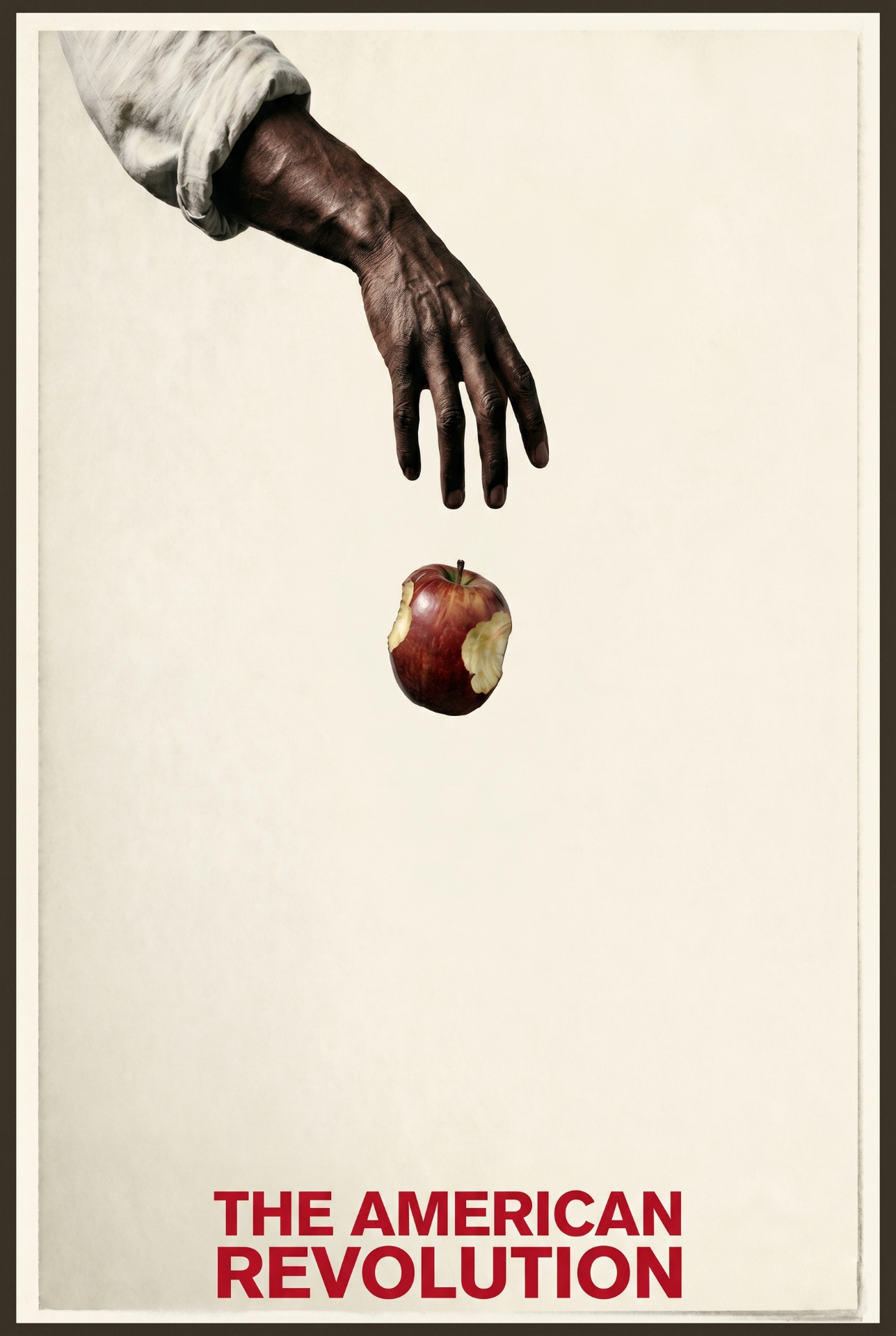
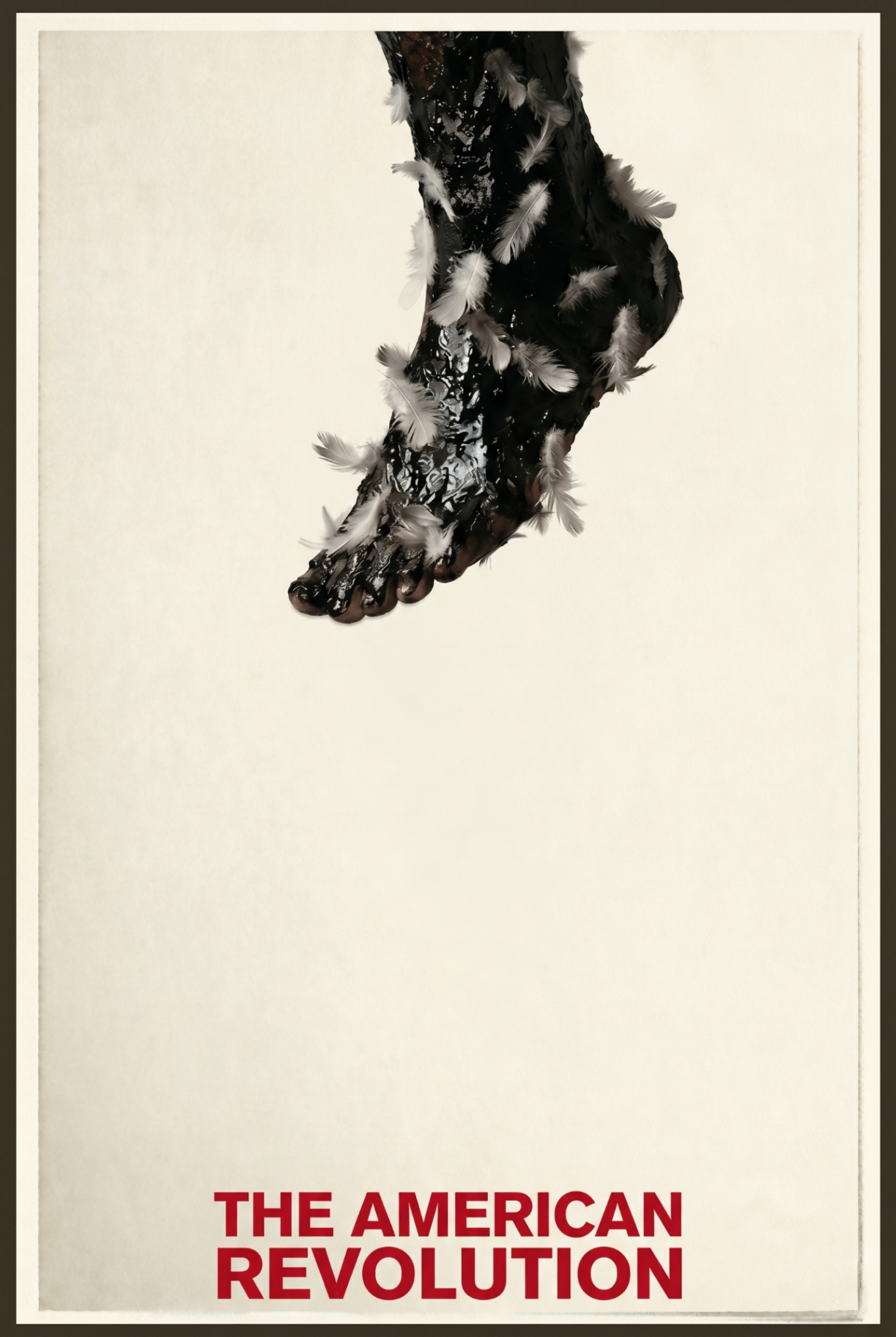
The AmericanRevolution


The American Revolution — a Black arm dropping a bitten apple. Production poster for Social Animal's inaugural production. The American Revolution — a Black foot coated in tar and feathers. Production poster for Social Animal's inaugural production.

If you have never seen a play written in verse, this is what verse is for. People are doing things to each other that ordinary speech cannot quite reach — winning, losing, betraying, falling in love in front of a witness who matters. Heightened language is the most precise instrument we have for that.

Iambic pentameter meets vaudeville meets American ferocity. Bromley’s play is a live demonstration of the thesis: every founding father performing a version of themselves for history, for each other, for a country that doesn’t exist yet.

OBIE Award winner James Urbaniak — a legend of downtown New York theater — travels from Los Angeles to play Washington. Playwright Kirk Wood Bromley will be in the room. This is the first event in a national series.

We open in North Carolina — three weeks after the 250th anniversary of the Declaration of Independence — because this state was a battleground then, and the questions it fought over are unresolved now.

Wild, dense, politically ferocious — a play that insists the founding story is not finished with us. On The American Revolution
FIG. IV every encounter has a slope
The Company

Social Animal is forming now. The American Revolution is its inaugural production.

We make theater
for people who know
something is at stake.

Social Animal is built to produce plays in which the performance of identity is not subtext — it is subject. We work between New York City, Manila, and the Carolinas — the places where we live and the places we return to.

Social Animal carries the work of Kirk Wood Bromley as core repertoire. Bromley is the only living American playwright whose body of work is written entirely in verse — iambic pentameter holding philosophers and drunks, founding fathers and deranged truckers, the divine and the obscene, in the same line. The high and the low don’t alternate. They share the breath. The company is being built, in part, to keep that work in performance — and to set it beside Shakespeare and other writers for whom heightened language is the instrument of behavior, not the decoration of it.

This work brings together artists who understand that theater is not the illustration of ideas arrived at elsewhere. The stage is where the thinking happens — where a question about human behavior can be asked in real time, in front of witnesses, with consequences that are also real. The audience is not passive. They are the final target. They know what the character is doing because they do it too. That recognition is what we are after.

Social Animal is a forming ensemble — a company being built around the work of Kirk Wood Bromley and Shakespeare. Bromley is with us. He has given the work his blessing, sometimes his presence, and his ongoing counsel. We are building a company of artists who will return to this work, and to each other, across years and productions — in the cities where we live and the cities we keep coming back to.

We are forming something closer to a chamber group than a regional company — small, exacting, and built to play this repertoire at a high level for a long time. Training matters and we respect it. The conservatory, the MFA, the years in regional houses — that work shows, and we want it in the room. We also want the artist who came up another way: the indie company, the storefront, the basement, the late-night room, the one who learned the verse on their own because no one was going to teach it to them. The electricity is in the mix. The trained actor next to the one who taught herself. The high and the low in the same scene, the same line, sometimes the same breath. That friction is the sound of the work. The thing they have in common is what we are actually casting for — an open mind, curiosity, a lack of preciousness, a willingness to look at the impolite and the human and the real, a willingness to learn in public, and the absence of judgment toward the work or the people doing it. Elite standard. Loose room. Theater is democratic, and so is the room — all kinds of social animals.

More on how I think about this work →

Social Animal is being assembled now. We are looking for actors who love heightened language and are honest about what they're still learning. Designers who think in behavior. Producers and presenters in New York, Manila, the Carolinas, and the cities where this work might belong — people who want collaborators who show up ready and leave the house better than they found it.

The first project is The American Revolution by Kirk Wood Bromley, opening in North Carolina in July 2026 with James Urbaniak as Washington and Bromley in the room. It is the first event in a national series — twenty Bromley plays, one per season through 2031, performed across a network of directors and theaters and colleges around the country. Social Animal opens the series. The other companies follow.

What that means for the artists who join us now: a five-year body of work. Each season we will produce one reading from the Bromley slate as the Carolinas home of the series, and lift one play from each year into a full production. The American Revolution is the first. The 2027 season includes Want's Unwisht Work, Griffin Hunter, Icarus and Aria, and Midnight Brainwash Revival — one of which we will fully stage as a run. The seasons that follow are loaded with work of the same scale.

This is unusual. Most American actors will work on Bromley once if at all. The artists who join this company will spend five years inside one of the most demanding bodies of dramatic verse written in the last fifty years, alongside a director who originated roles in the world premieres of Midnight Brainwash Revival, Griffin Hunter, and Icarus and Aria, and who has directed all three in the years since. The point is time. Time with one playwright, one method, and one set of collaborators — long enough to actually get somewhere.

The method is the one you can read on this site — Social Animal, the synthesis built across thirty years and twenty-five productions, the framework where target, status, presented self, and tactic are the four strokes of every scene. The work is demanding. The standard is high. The room is real.

What we promise our collaborators

We arrive prepared. We rehearse early. We pay what we say we will pay, when we say we will pay it. We bring the play, not the politics. We treat the audience as the final scene partner, not the customer. We tell the truth about what is working and what isn't — in the room, and after it. The room is steady. The work is the point. You will know where you stand.

What we ask in return

Write us a real letter. Tell us who you are, what you make, and what about this work feels like yours. We read every letter. We answer carefully, not quickly. We are a small company building slowly, and we would rather find each other well than fast. Tell us who you are and how you got here.

Write to us →

FIG. V the room is real